Description
Chess is a game steeped in history, with origins tracing back to the 6th century in India. It has evolved into a complex battle of wits played on an 8×8 board, where two players command an army of 16 pieces each, including pawns, knights, bishops, rooks, a queen, and a king. The objective is straightforward: checkmate the opponent’s king while safeguarding one’s own.
Each piece moves in unique ways, contributing to the game’s intricate strategies and tactics. For instance, pawns advance forward but capture diagonally, while knights leap in an L-shape, creating opportunities for unexpected attacks. Understanding the fundamental rules is essential for any aspiring chess player.
Each piece has its own strengths and weaknesses, and recognizing these can significantly influence gameplay. The king, while the most crucial piece, is limited in movement and must be protected at all costs. The queen, on the other hand, is the most powerful piece on the board, capable of moving any number of squares in any direction.
This dynamic creates a delicate balance between offense and defense, where players must constantly evaluate their positions and anticipate their opponent’s moves. Familiarity with basic concepts such as check, checkmate, stalemate, and draws is vital for navigating the complexities of the game.
Key Takeaways
- Understanding the basics of chess is crucial for beginners, including learning the movement of each piece and the objective of the game.
- Developing opening strategies is important for controlling the center of the board and preparing for the middle game.
- Mastering middle game tactics involves understanding pawn structures, piece coordination, and creating a plan based on the position.
- Utilizing endgame techniques requires knowledge of basic checkmating patterns and the ability to convert an advantage into a win.
- Learning from grandmasters can provide valuable insights into advanced strategies, positional understanding, and decision-making in complex positions.
Developing Opening Strategies
Opening strategies in chess are critical as they lay the groundwork for the middle game and endgame. The opening phase typically consists of the first 10 to 15 moves, where players develop their pieces and control the center of the board. Controlling the center is paramount because it allows for greater mobility and influence over the game.
Common opening strategies include the Ruy Lopez, Sicilian Defense, and Queen’s Gambit, each with its own set of principles and tactical ideas. In developing an opening repertoire, players should focus on principles rather than memorizing specific moves. For example, developing knights before bishops is often recommended because knights are more effective in the early stages of the game.
Additionally, players should aim to connect their rooks by moving their pawns and minor pieces out of the way. This not only enhances piece coordination but also prepares for potential attacks or defenses against an opponent’s strategy. Understanding these foundational concepts can lead to a more robust opening strategy that adapts to various opponents and styles of play.
Mastering Middle Game Tactics
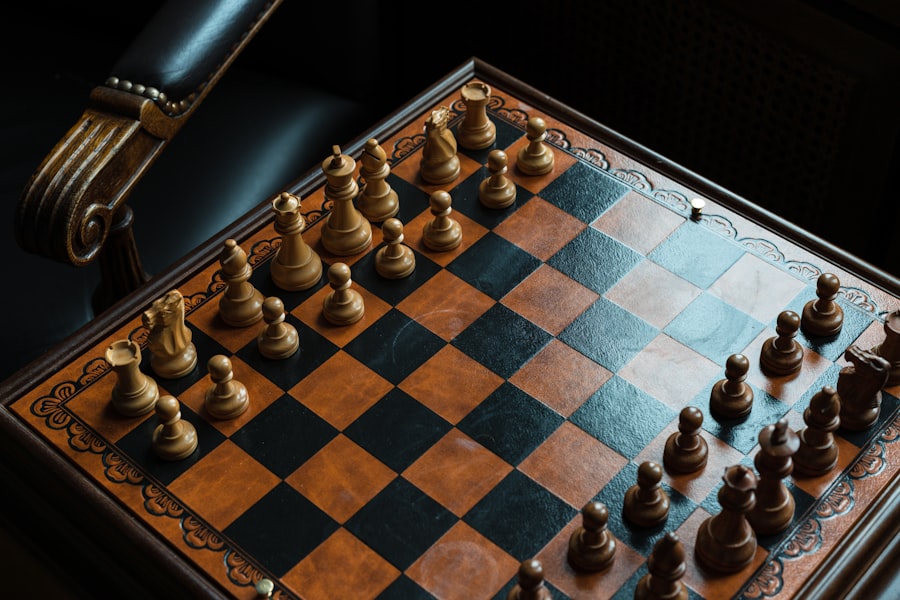
The middle game is where chess truly comes alive, characterized by complex tactical battles and strategic maneuvering. After establishing their positions during the opening phase, players must now navigate a landscape filled with potential threats and opportunities. Tactics such as forks, pins, skewers, and discovered attacks become essential tools in a player’s arsenal.
For instance, a fork occurs when a single piece attacks two or more enemy pieces simultaneously, forcing the opponent to make difficult choices about which piece to save. In addition to tactical awareness, players must also develop strategic plans during the middle game. This involves evaluating the strengths and weaknesses of both their own position and that of their opponent.
A player might identify weaknesses in their opponent’s pawn structure or an exposed king and formulate a plan to exploit these vulnerabilities. Furthermore, understanding concepts like open files for rooks or outposts for knights can provide significant advantages in positioning.
Utilizing Endgame Techniques
| Endgame Technique | Definition | Example |
|---|---|---|
| Zugzwang | Forcing the opponent to make a disadvantageous move. | Position where any move will worsen the opponent’s position. |
| Opposition | Placing the kings directly opposite each other with an odd number of squares between them. | Using the opposition to advance the king and gain space. |
| Triangulation | Wasting a move to put the opponent in a worse position. | Using triangulation to gain a tempo in a king and pawn endgame. |
The endgame represents a critical phase in chess where fewer pieces remain on the board, and precise calculation becomes paramount.
Players must be adept at converting material advantages into victory or defending against seemingly lost positions.
Key concepts include king activity, pawn promotion, and opposition. One fundamental endgame technique is understanding how to convert a pawn advantage into a winning position. For example, if one player has an extra pawn in a king and pawn endgame, they must aim to promote that pawn while simultaneously preventing their opponent’s king from achieving a favorable position.
The concept of opposition—where one king directly faces another king with an odd number of squares between them—can determine who has the initiative in these endgame scenarios. Mastering these techniques not only enhances a player’s ability to win but also equips them with defensive strategies to salvage draws from difficult positions.
Learning from Grandmasters
Studying the games of grandmasters provides invaluable insights into high-level chess play. Grandmasters are not only skilled players but also exceptional strategists who have honed their craft over years of practice and competition. Analyzing their games allows players to understand advanced concepts such as pawn structure, piece coordination, and timing in both tactical and strategic contexts.
Many grandmasters have published annotated games that explain their thought processes during critical moments, offering a window into their decision-making. One notable example is Garry Kasparov, widely regarded as one of the greatest chess players of all time. His games often showcase aggressive opening play followed by intricate middle game tactics that capitalize on his opponents’ weaknesses.
By studying Kasparov’s games, players can learn how to create imbalances in positions that lead to favorable outcomes. Similarly, players can benefit from examining contemporary grandmasters like Magnus Carlsen or Fabiano Caruana, who employ modern strategies and adapt to evolving trends in chess theory.
Improving Calculation and Visualization
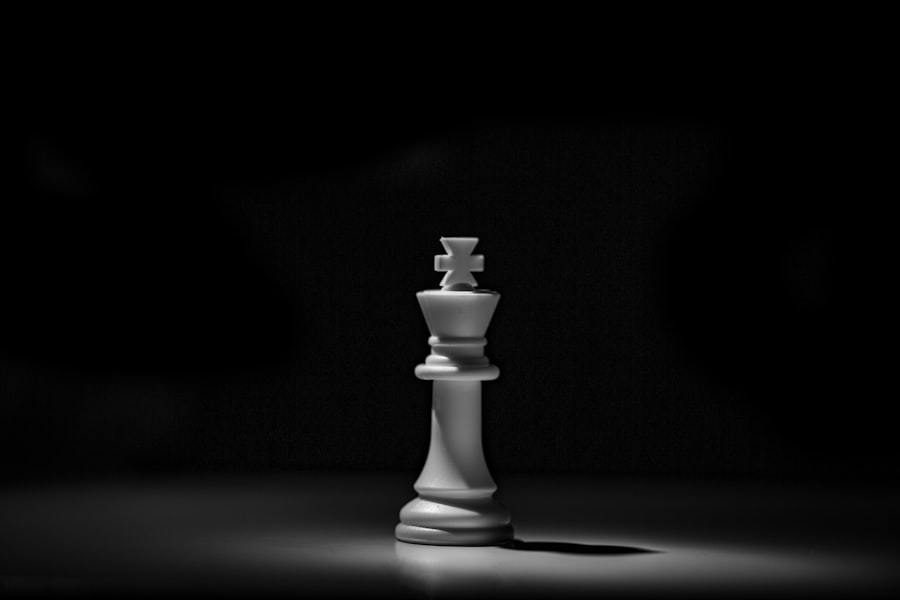
Calculation is a fundamental skill in chess that involves predicting future moves and outcomes based on current positions. Strong players can visualize several moves ahead, considering various responses from their opponents while weighing potential consequences. This ability to calculate accurately can be developed through practice and training exercises that challenge a player’s tactical vision.
Puzzles that require finding the best move or sequence of moves can sharpen this skill significantly. Visualization goes hand-in-hand with calculation; it involves mentally picturing the board without physically moving pieces. This skill is crucial during complex positions where multiple variations must be considered simultaneously.
Players can enhance their visualization abilities through techniques such as blindfold chess or by analyzing positions without a board. Regularly engaging in these exercises can lead to improved performance during actual games as players become more adept at anticipating their opponent’s responses and planning their strategies accordingly.
Enhancing Positional Understanding
Positional understanding is an essential aspect of chess that transcends mere tactical calculations. It involves grasping the underlying principles that govern piece placement and pawn structure throughout the game. A player with strong positional understanding can evaluate positions more effectively and make informed decisions about when to trade pieces or maintain tension on the board.
Key elements include pawn structure, piece activity, control of key squares, and king safety. For instance, recognizing strong versus weak pawns can significantly influence strategic decisions. Isolated pawns can become targets for attack while connected pawns can create formidable structures that support each other.
Additionally, understanding how to create open files for rooks or outposts for knights can lead to advantageous positions that capitalize on an opponent’s weaknesses. By enhancing positional understanding through study and practice, players can elevate their overall gameplay and make more nuanced decisions that lead to long-term advantages.
Managing Time and Resources
Time management is a critical component of chess that often goes overlooked by beginners but becomes increasingly important at higher levels of play. In tournament settings or online matches with time controls, players must balance their decision-making process with the ticking clock. Effective time management involves knowing when to spend time on critical moves versus when to play quickly in less consequential positions.
Resource management extends beyond time; it encompasses managing material resources effectively throughout the game. Players must evaluate trades carefully—sometimes sacrificing material for positional advantages or tactical opportunities can yield greater benefits in the long run. Understanding when to simplify positions by exchanging pieces or when to maintain complexity can significantly impact a player’s chances of success.
By honing both time management skills and resource allocation strategies, players can navigate games more effectively and increase their likelihood of achieving favorable outcomes against opponents of varying skill levels.
If you’re a fan of chess, you may also be interested in learning about the benefits of playing strategy games like Jurassic World Alive. Check out this article on Jurassic World Alive to see how it can improve your critical thinking skills and decision-making abilities.
FAQs
What is chess?
Chess is a two-player strategy board game that is played on an 8×8 grid. It is one of the most popular and enduring games in the world, with a rich history dating back over a thousand years.
How is chess played?
Chess is played on a square board divided into 64 squares, with each player starting with 16 pieces: one king, one queen, two rooks, two knights, two bishops, and eight pawns. The objective of the game is to checkmate the opponent’s king, which means putting the king into a position where it cannot escape capture.
What are the basic rules of chess?
Each type of chess piece moves in a specific way, and players take turns moving their pieces across the board. The game ends when one player’s king is in checkmate, or when a stalemate is reached.
What are the benefits of playing chess?
Chess has been shown to have numerous cognitive benefits, including improving memory, concentration, problem-solving skills, and strategic thinking. It is also a great way to improve patience and decision-making abilities.
Are there different variations of chess?
Yes, there are many different variations of chess, including speed chess (blitz and bullet), chess960 (also known as Fischer Random Chess), and team chess (such as bughouse or team relay chess). Each variation has its own unique rules and strategies.
Is chess considered a sport?
While chess is not a physical sport, it is recognized as a sport by the International Olympic Committee and many national sports federations. Chess requires intense mental focus, strategic thinking, and competitive skill, which are all qualities of a sport.